
Sources for Mission Viejo Past Residents
One address can have several histories. The deed trail answers ownership. A permit dates construction or change. A newspaper or obituary places a household in a particular year. Archives preserve older county material. The coverage table shows where each layer begins and where its gaps remain.
| Source | Years or extent | Where held | What it may show |
|---|---|---|---|
| Recorder web index | Start not officially stated; reference split pre-1982 and 1982 forward | Orange County Clerk-Recorder | Indexed grantor, grantee, type, date, and reference |
| Property-index volumes | 1889-1953 | Orange County Archives | Older grantor, grantee, and legal-chain clues |
| Original deed volumes | 1889-1926 | Orange County Archives | Instrument substance for older county property |
| Mission Viejo development | Company 1963; first families 1966 | Library, county, and local history sources | Earliest plausible modern suburban-address era |
| EnerGov permits | Modern; Legacy before September 7, 2023 | Mission Viejo Building Services | Project, inspection, and named-role chronology |
| Census schedules | Public through 1950 | NARA and databases | Ranch-era or predevelopment households |
| Reverse directories and Sanborn maps | Not verified locally | Ask Mission Viejo Library | Possible address or building context only after confirmation |
The first modern suburban household evidence should not be projected before the development dates. A county deed from an earlier era may describe ranch or tract land rather than the present street.
Start With a Mission Viejo APN
Resolve the address before searching names. Mission Viejo Community GIS accepts a number and bare street name, lets the researcher click a parcel, and can show property, HOA, zoning, flood, school, water, trash, sweeping, and watershed layers. Carry the APN, tract, lot, or legal-description clue into the county tools.
The Assessor’s public form asks for an eight-digit APN and returns supported roll concepts such as land value, improvement value, total assessed value, exemptions, and net taxable value. It does not offer a public owner-name search. The Tax Collector adds current or prior bill and map context, but published bills can suppress assessee and address details.
Use the Orange County tax search when a dated parcel or bill clue is needed.
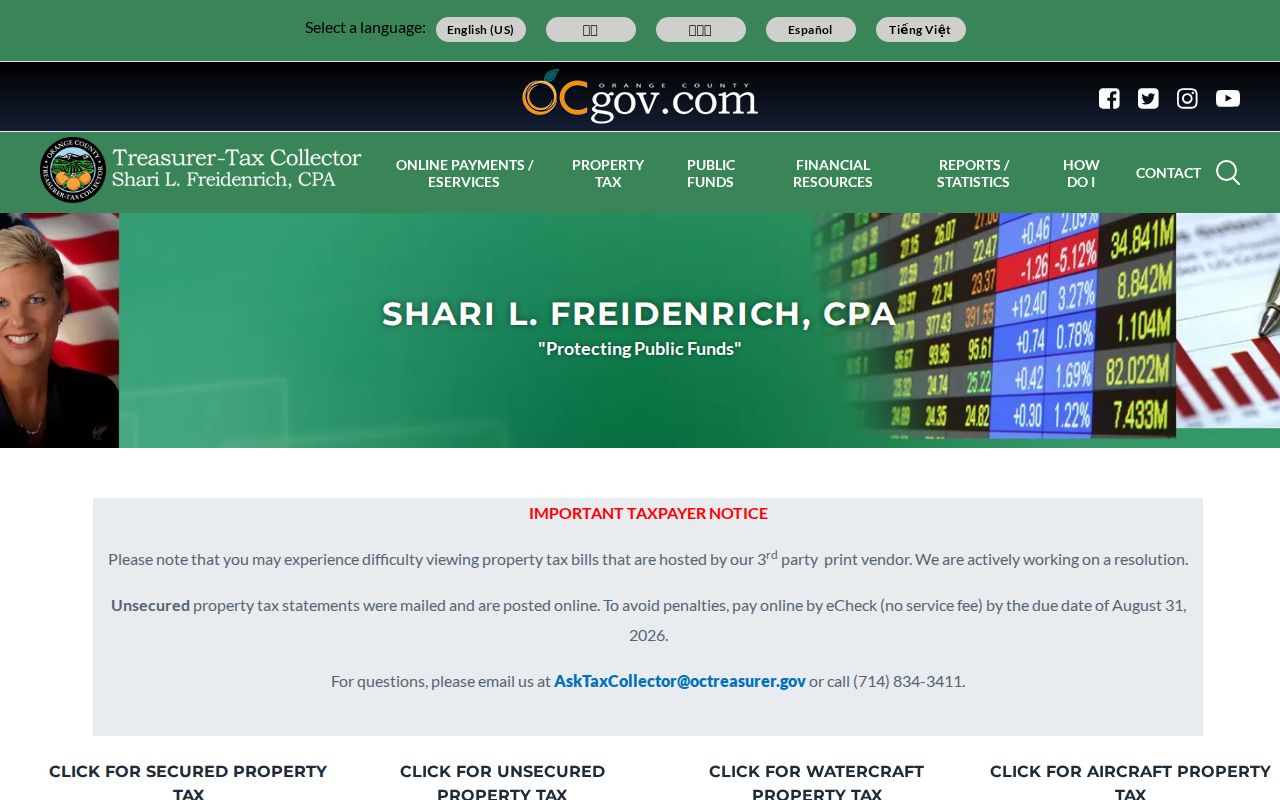
A tax bill is a dated administrative record. It is useful for chronology, but it is not a complete list of former occupants.
Trace Mission Viejo Ownership Backward
The Orange County Grantor-Grantee Index is a name index, not an address search. Once a current titleholder or instrument reference is lawfully known, search the titleholder as grantee for the acquisition deed. Order the instrument when the legal description, vesting, return address, or party capacity matters. The copy page inspected lists $1 per page plus $1 for certification per document or map.
- Convert the street address to APN, tract, lot, or legal description.
- Identify a current titleholder or known recorded instrument without treating the Assessor’s public web form as an owner directory.
- Search the titleholder as grantee and record the document type, recording date, and reference.
- Order the acquisition document and read grantor, grantee, vesting, legal description, return address, and prior instruments.
- Search the seller as an earlier grantee and repeat, joining on parcel, legal description, dates, and co-parties.
- Pivot to Archives, probate, maps, newspapers, or permits when the chain reaches a developer or stops at an entity.
- Grantor
- The party conveying or releasing an interest in the recorded instrument.
- Grantee
- The party receiving or being named in the recorded interest.
- Chain of title
- A sequence of recorded transfers that connects interests in land across time.
- Legal description
- The tract, lot, map, or other land description that can remain stable when postal wording changes.
See the Clerk-Recorder copy instructions before requesting a deed. The office says it will not conduct a title search for the requester.
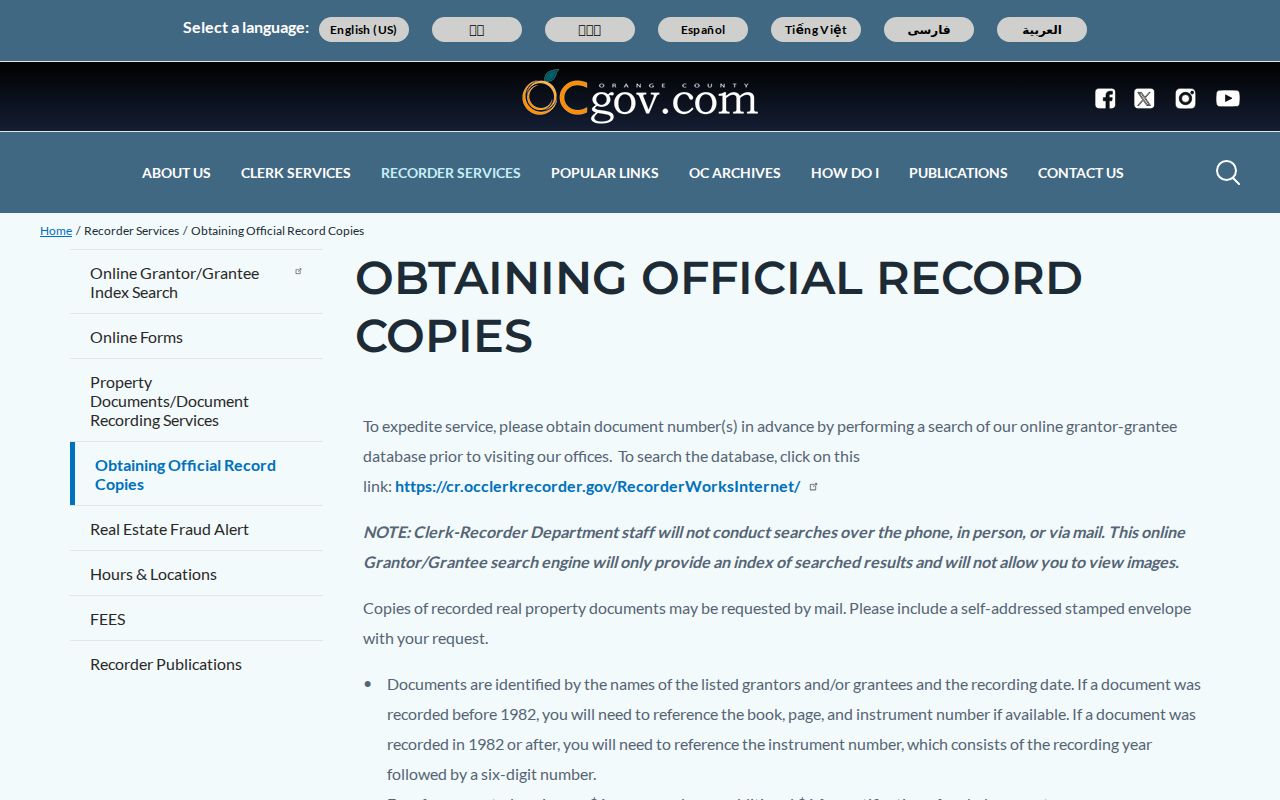
The copy process turns an index reference into the instrument needed to read ownership history with care.
Mission Viejo Recorder References After 1982
Orange County’s current instructions distinguish older and newer reference styles. Pre-1982 copies use book, page, and instrument details when available. From 1982 forward, the county describes a recording year plus a six-digit instrument number. The exact first year of the online index was not stated, so do not substitute the county’s 1889 founding date as an online coverage date.
This reference change is a practical search clue. A researcher who carries a modern year-and-number assumption into older books may miss the instrument. A researcher who assumes every 1889 county deed is online may miss Archives holdings. Keep the reference exactly as the custodian gives it.
640 Deed Volumes at County Archives
Orange County Archives conserved 640 original deed volumes from 1889 through 1926 and 210 property-index volumes from 1889 through 1953. Most holdings predate 1960. The Archives is in the Old Orange County Courthouse, Room 108, at 211 W. Santa Ana Boulevard. Research hours are listed as weekdays from 9 to noon and 1 to 4:30, with archives@rec.ocgov.com and 714-834-2536 as contact routes.
Those numbers explain why previous residents cannot be found by a single modern portal. Archives can bridge a legal description or tract clue into older county books. Recent birth, property, and tax-lien records go to the Clerk-Recorder, while divorce files go to Superior Court.
Start at the Orange County Archives holdings page and ask for a finding aid tied to the legal description or developer.
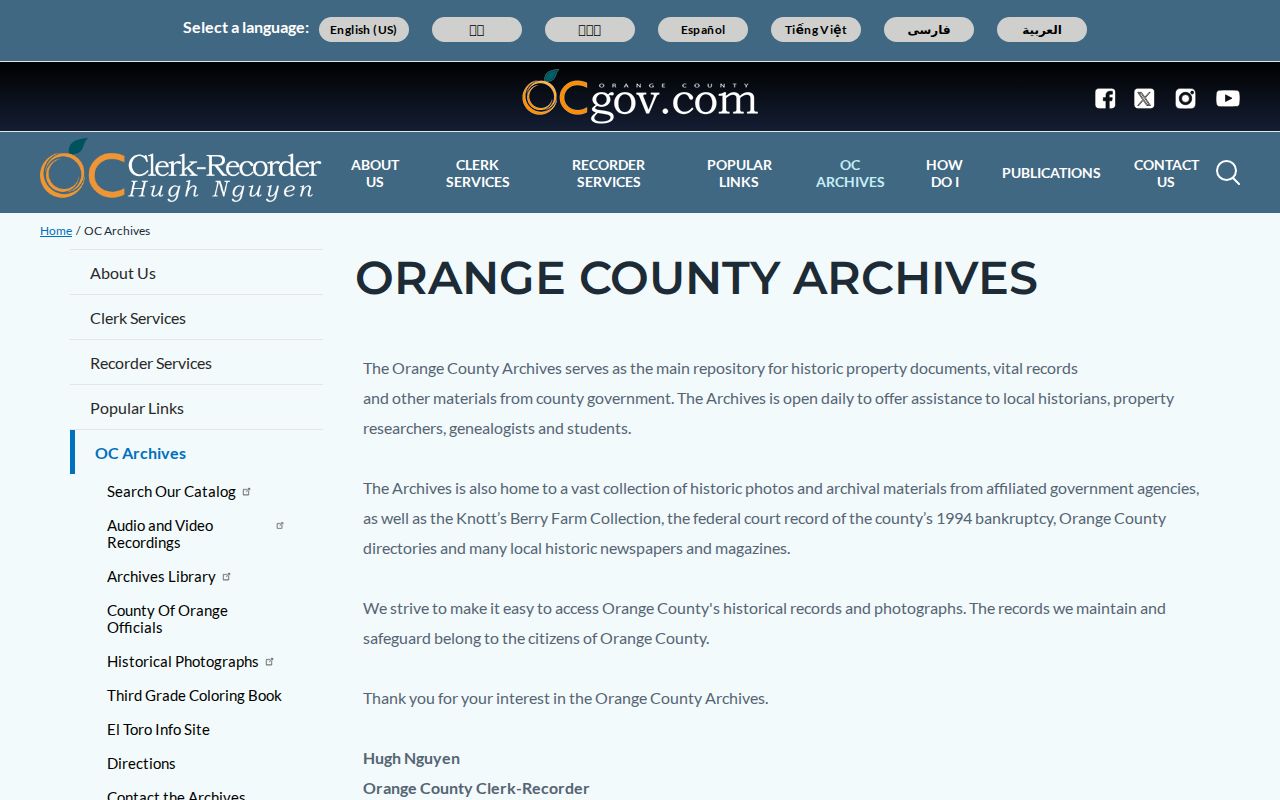
The Archives bridge is strongest when the modern recorder search reaches a pre-digital reference, an early tract, or a county property index.
Use the Orange County Archives contact page to confirm the reading-room route and the finding aid needed for an older address.
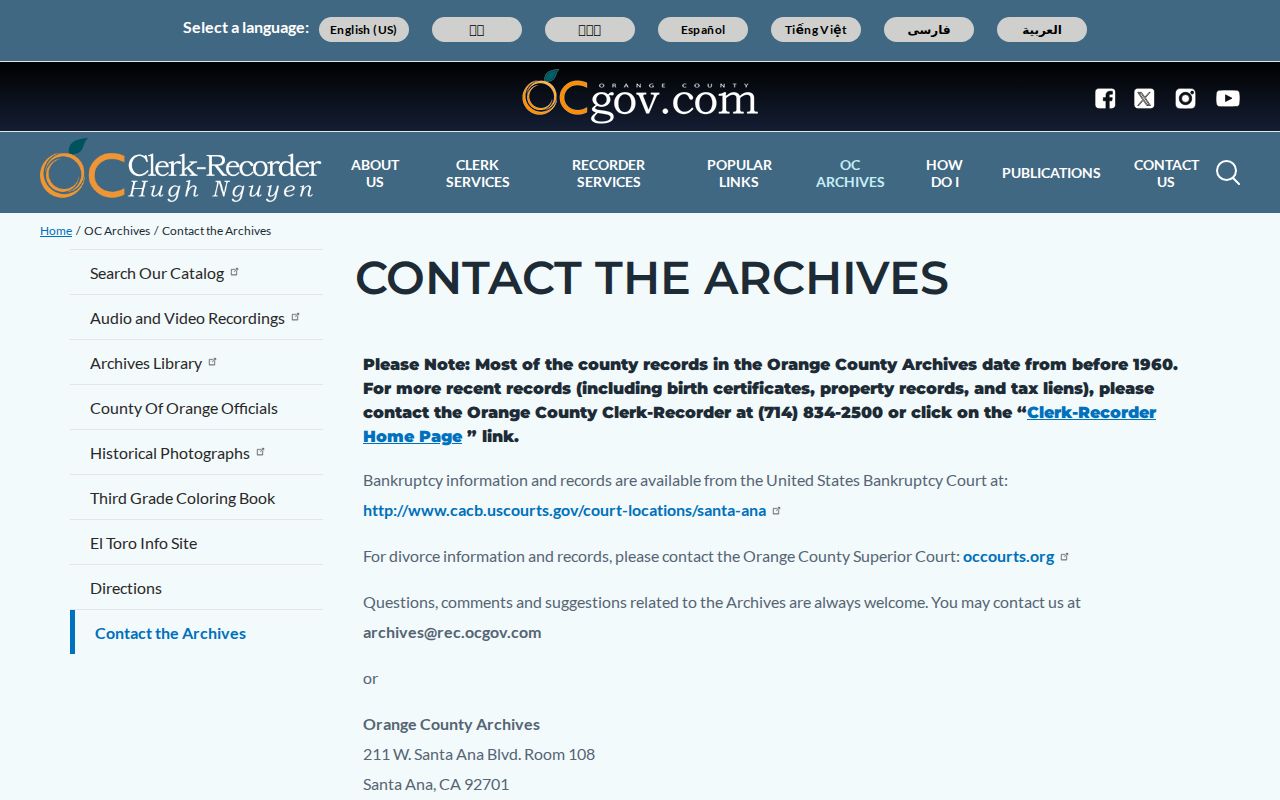
A direct archive question is more useful than asking a custodian to create a list of former residents.
1966 Starts the Mission Viejo Trail
Mission Viejo Company began development in 1963, the county plan followed in 1965, and the first families arrived in 1966. Granada and Mission Ridge date to 1968, Madrid and Aliso Villa to 1971, and Barcelona to 1972. These milestones set sensible date floors for a modern address search.
A purported Barcelona address record before the neighborhood’s 1972 arrival needs scrutiny. An early reference may use a tract, builder, ranch-family name, county map, or project label rather than today’s street. Search the subdivision or builder in newspapers, meeting packets, brochures, and county approvals when a postal search fails.
Geography clue. A development name can be a better historical index than a modern street name. Treat it as a search term, not as proof that a particular person occupied the later house.
Permits and Tax Bills Date a House
Mission Viejo Building Services can expose permit number, site, owner or contractor role, applicant, scope, dates, plan activity, inspection activity, and use classification. Pre-September 7, 2023 files are labeled Legacy Permits. A permit dates work and names project roles; it does not prove that an applicant or contractor lived at the site.
County tax bills provide another dated layer, with payment and parcel context. Assessments reflect an annual roll point. A later sale, exemption change, or correction may not appear until a later roll. Keep the issuance date and retrieval date with the bill.
For a missing older file, ask Mission Viejo for final permit cards, certificates of occupancy, and inspection histories by APN, address, and date range. Exclude plans if a request raises security or copyright concerns.
Past Mission Viejo Households in Print
Mission Viejo Library’s Mission Viejo Reporter run from 1966 through 1981 and Saddleback Valley News run from 1969 through 1989 can fill the household layer that deeds lack. Search names, streets, tract names, schools, clubs, weddings, civic meetings, ads, and obituaries. The library’s Heritage images, resident photos, brochures, videos, and interviews add place context.
For deaths after January 1, 1987, the Orange County Public Libraries obituary guide routes researchers to NewsBank and Orange County Register tools. Probate can identify a decedent, personal representative, petitions, notices, and orders. Compare that family evidence with a deed and do not assume a survivor remained at the address.
Historical directory runs remain unverified. Ask Mission Viejo Library whether Haines, criss-cross, telephone, or other reverse volumes cover the year. The absence of a confirmed volume is a gap to report, not a reason to invent a publisher or annual span.
Pair Address Evidence by Year
Previous residents are easiest to confuse when a source is accurate but belongs to a different year. Build a small timeline before joining names.
- Write the address, APN, tract, and legal description exactly as each source gives them.
- Mark the deed date, tax roll point, permit date, newspaper date, obituary date, and directory edition.
- Use a dated newspaper or photo to test occupancy or community association, not a deed alone.
- Use probate or an obituary as a family trail endpoint, then check the deed for the actual transfer.
- Describe uncertainty when a name, role, address, or time does not match across custodians.
Census schedules open through 1950 and therefore help with ranch or predevelopment history, not with later suburban streets. The library’s local-history collection and the Mission Viejo city-directory research route handle the dated community shelf.
Limits on Previous Residents
A deed chain usually follows ownership, not every person who occupied a home. Renters, children, household members, confidential voters, utility subscribers, and people associated with trusts or entities may leave no simple public trail. DMV residential data is protected, and vital, adoption, sealed, and juvenile records have separate controls.
Use old-address records for house history, genealogy, estate research, or a defined civic question. Preserve the source date, avoid unwanted contact, and verify a record with the custodian before relying on it.
Lawful use. A previous-residents search is for lawful personal research and historical work. Do not use an old address, deed, obituary, or family clue to stalk, harass, intimidate, or harm anyone.